Redesigning an existing Shopify store for the EU arm of a diagnostic tools business already established in the UK — sharpening the brand, modernising the UX, and making technically complex products easier to browse and trust.
OBD2EU sells professional diagnostic tools and remote parts catalogues to mechanics, workshops, and specialists across Europe. The business already had an established UK counterpart, OBD2UK, and this project focused on redesigning the EU-facing store so it felt clearer, more credible, and more tailored to its own market.
The client came to me needing a stronger visual identity and a more convincing e-commerce experience for the EU business. I took ownership of the redesign direction from wireframes through high-fidelity UI and final Shopify implementation, while also refining the brand expression used across the store.
The core creative challenge was that the products themselves — OBD scanners and parts catalogue subscriptions — are highly functional but not visually exciting. Making them feel premium and trustworthy to a professional B2B audience required deliberate visual thinking and a strong focus on usability.
Redesigning an existing store while giving the EU business a clearer identity created a different set of constraints. The main design challenges were:
I worked in structured phases — completing a page, sharing it with the client, incorporating feedback, then moving on. This kept the client engaged and aligned throughout, and avoided late-stage surprises.
Designed the logo and established a visual language — colour, type, and tone — that would carry through the entire store. Goal: technical credibility without feeling cold.
Built detailed low-fidelity wireframes for each key page. Shared each page with the client for sign-off on layout and content hierarchy before moving to high-fidelity.
Once the client was happy with the layout of each page, I moved to polished, component-based designs in Sketch — then implemented directly into Shopify.
Scroll to explore the final hi-fi screens
A few of the strongest final screens from the redesign
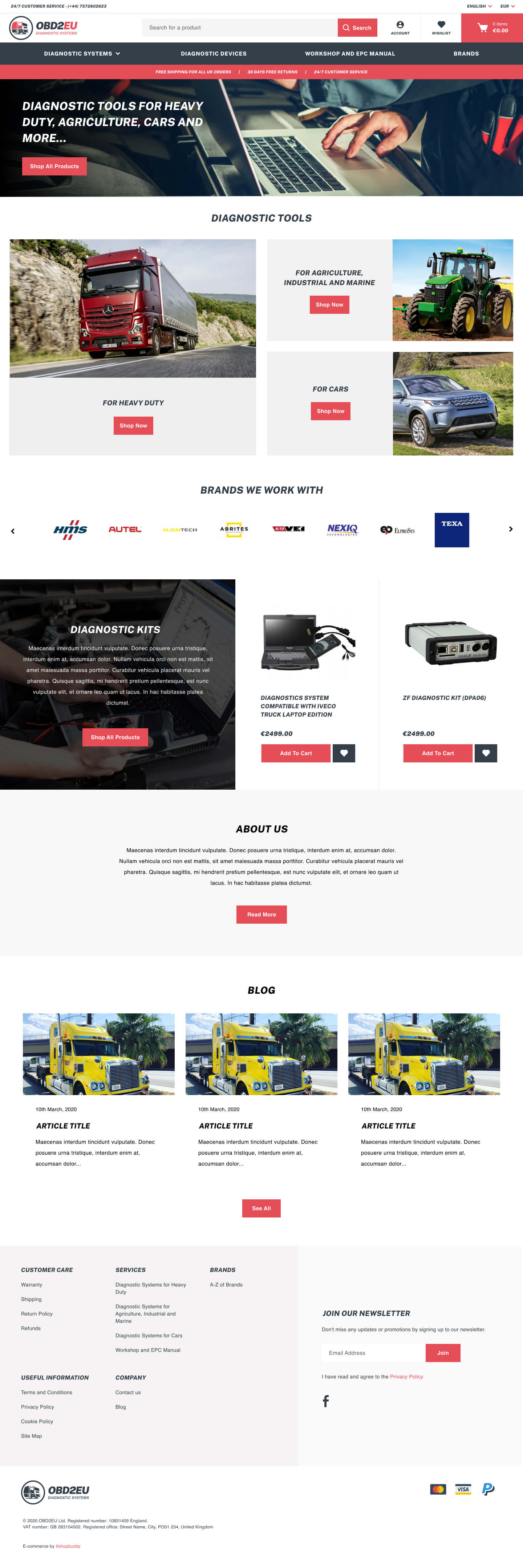
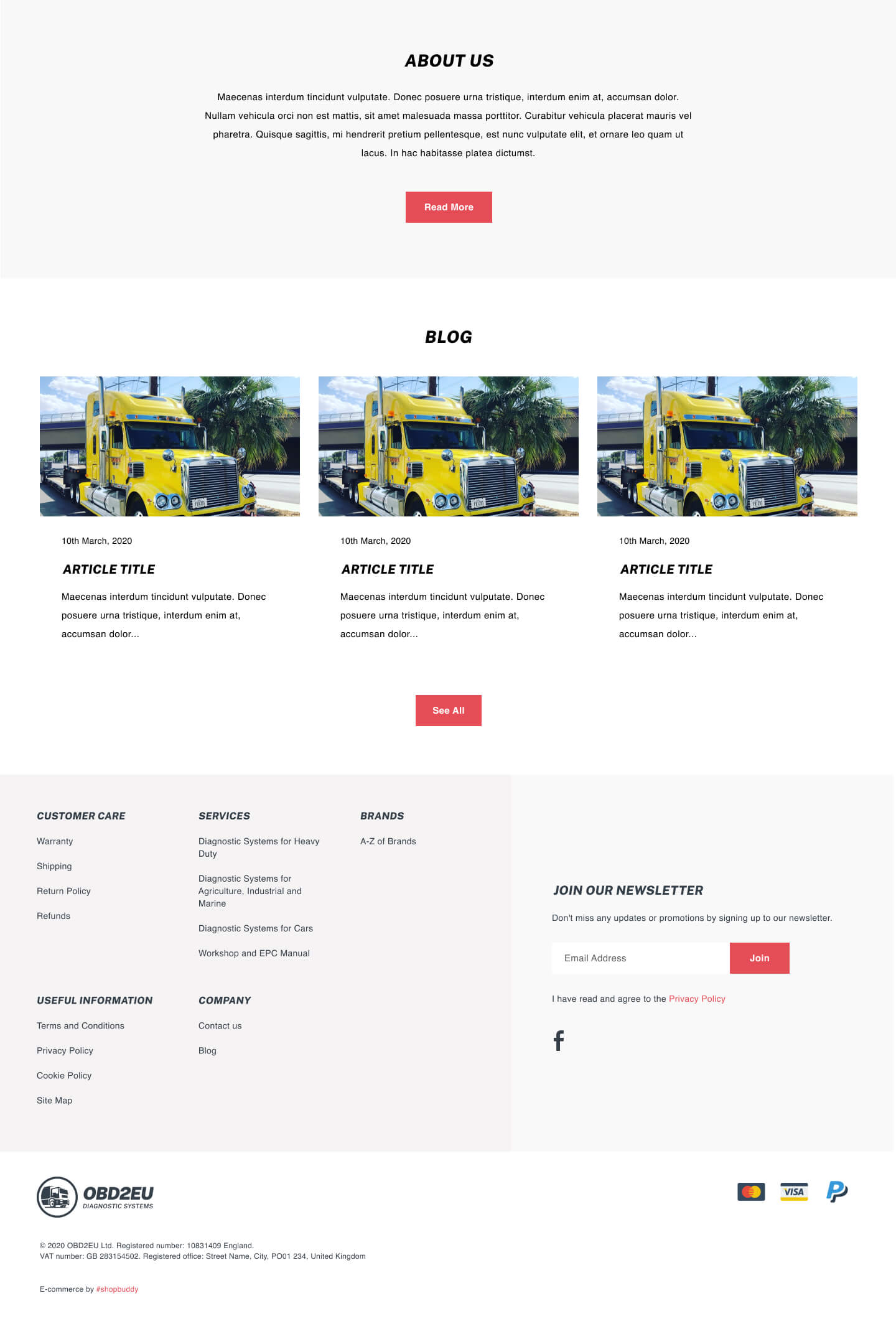
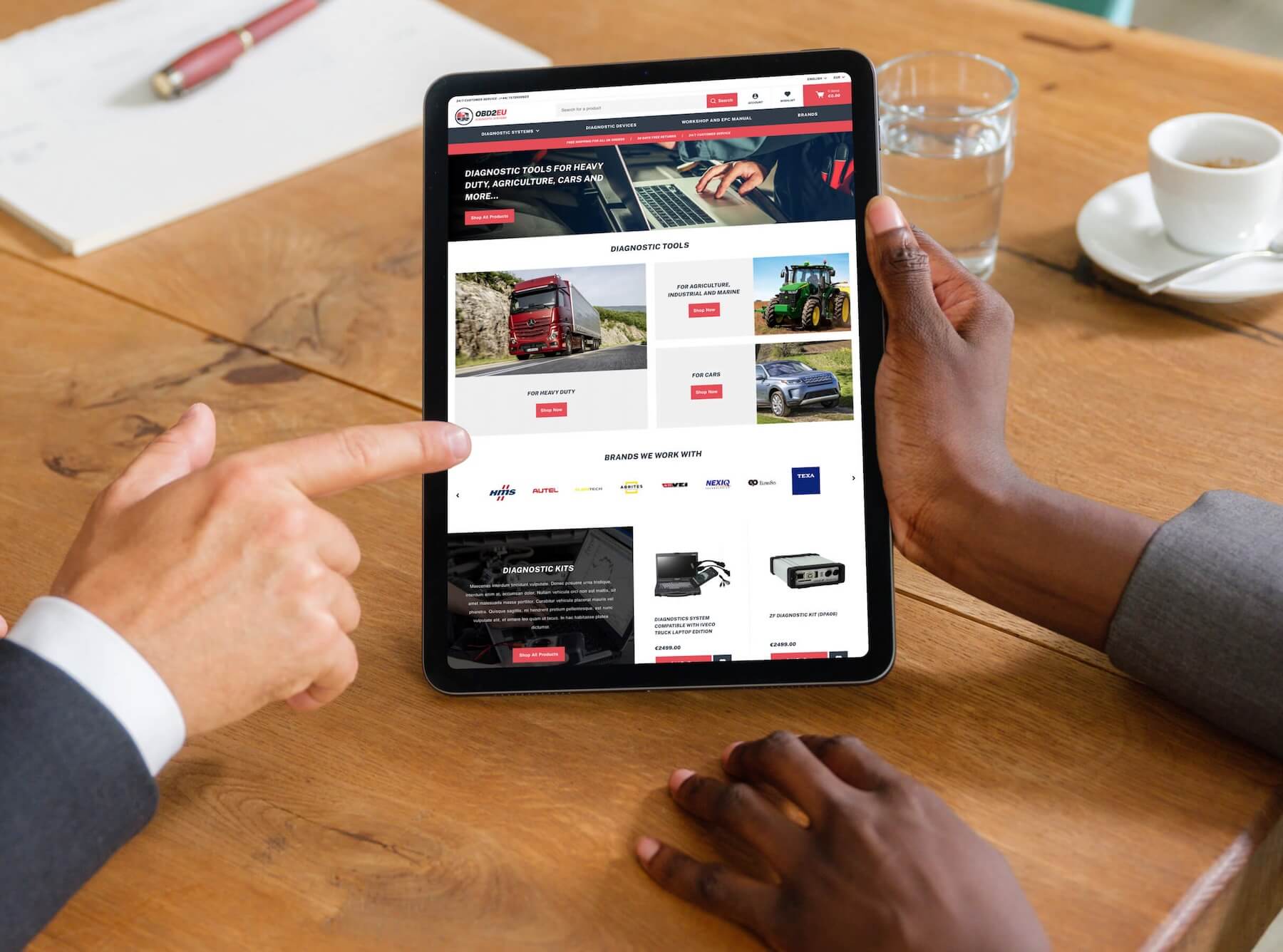
Homepage redesign — clearer hierarchy, stronger trust signals, and a more confident first impression for trade buyers.
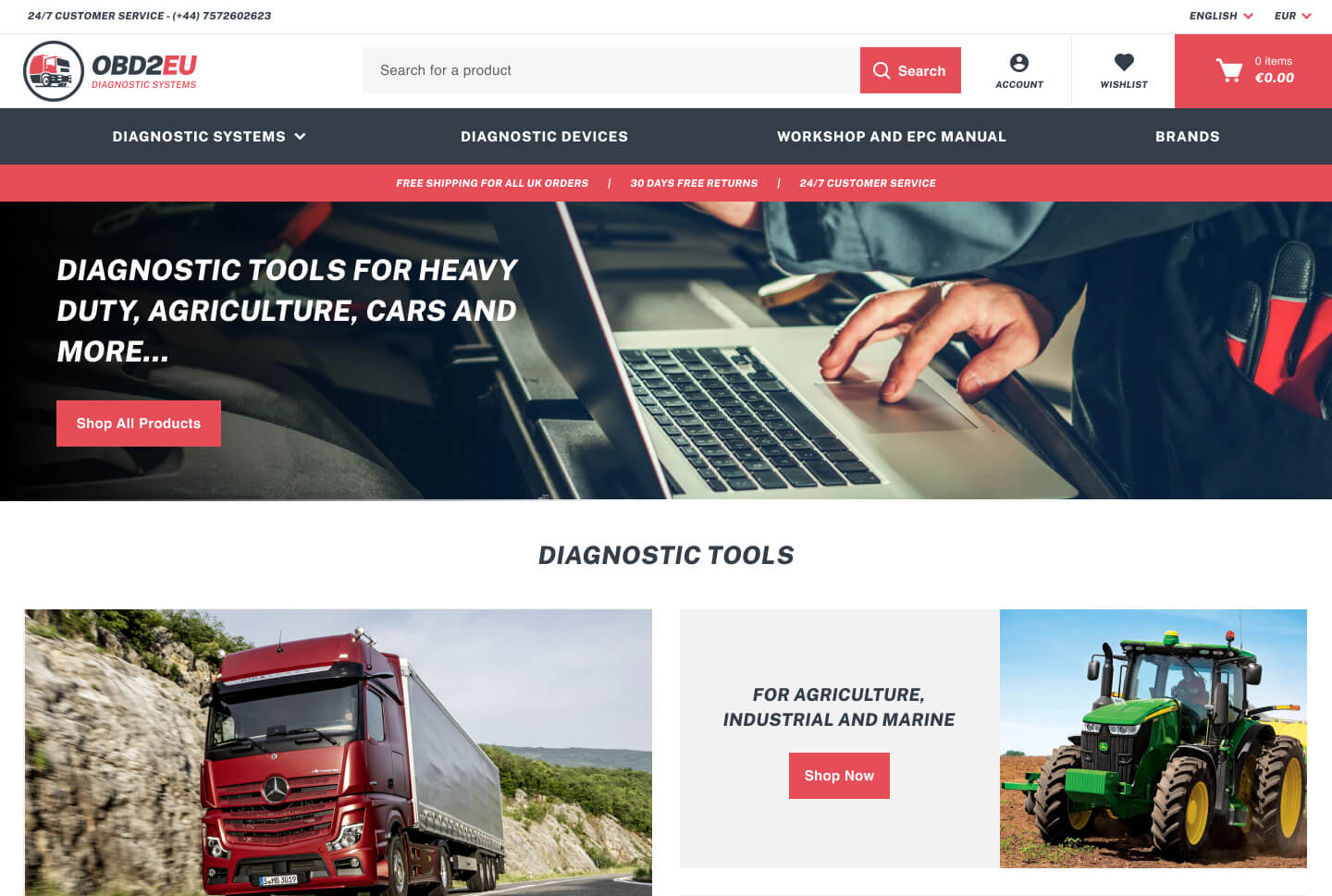
Homepage zoom detail — closer look at content hierarchy, trust cues, and visual structure.
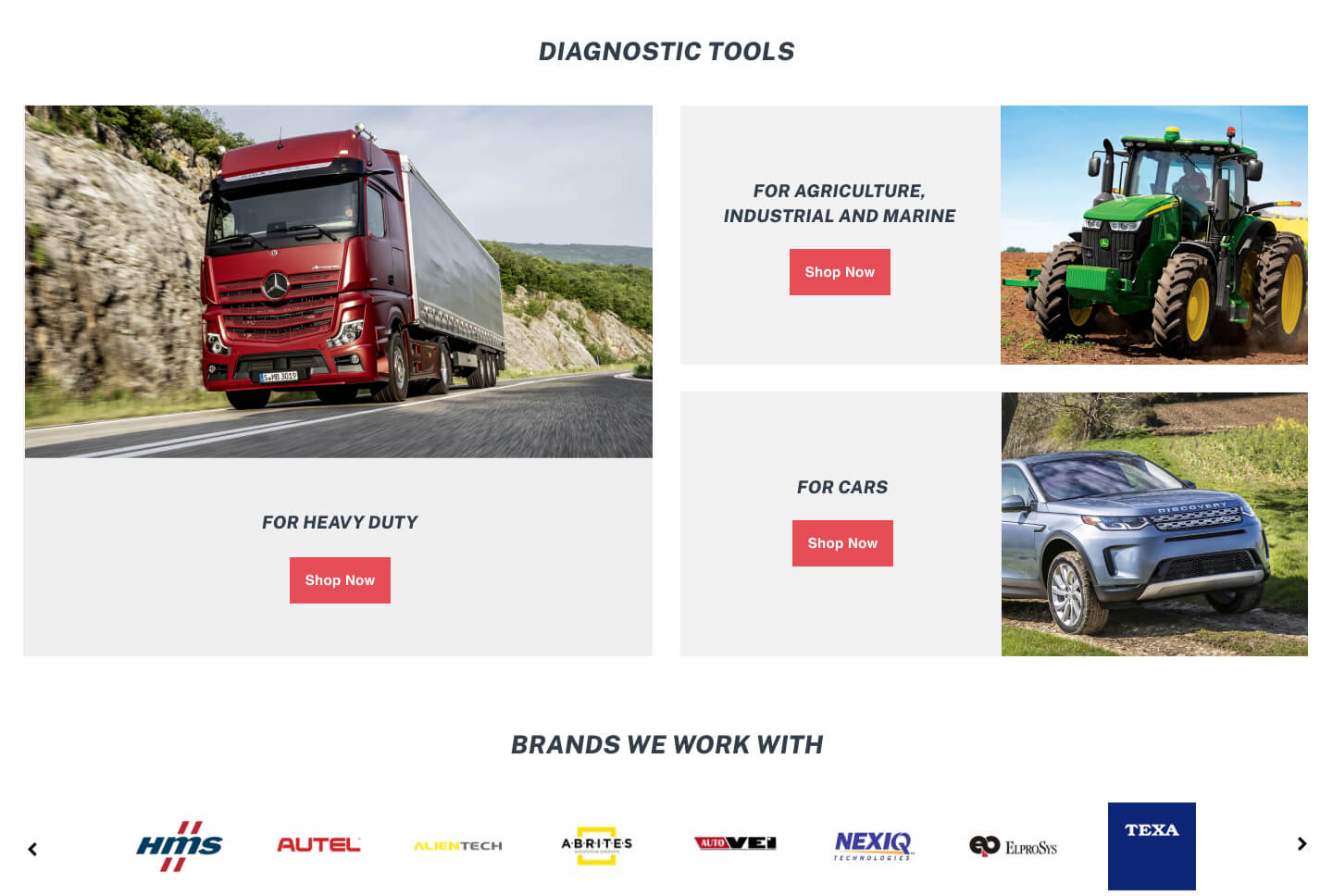
Homepage below-the-fold detail 1 — supporting content and trust-building sections.
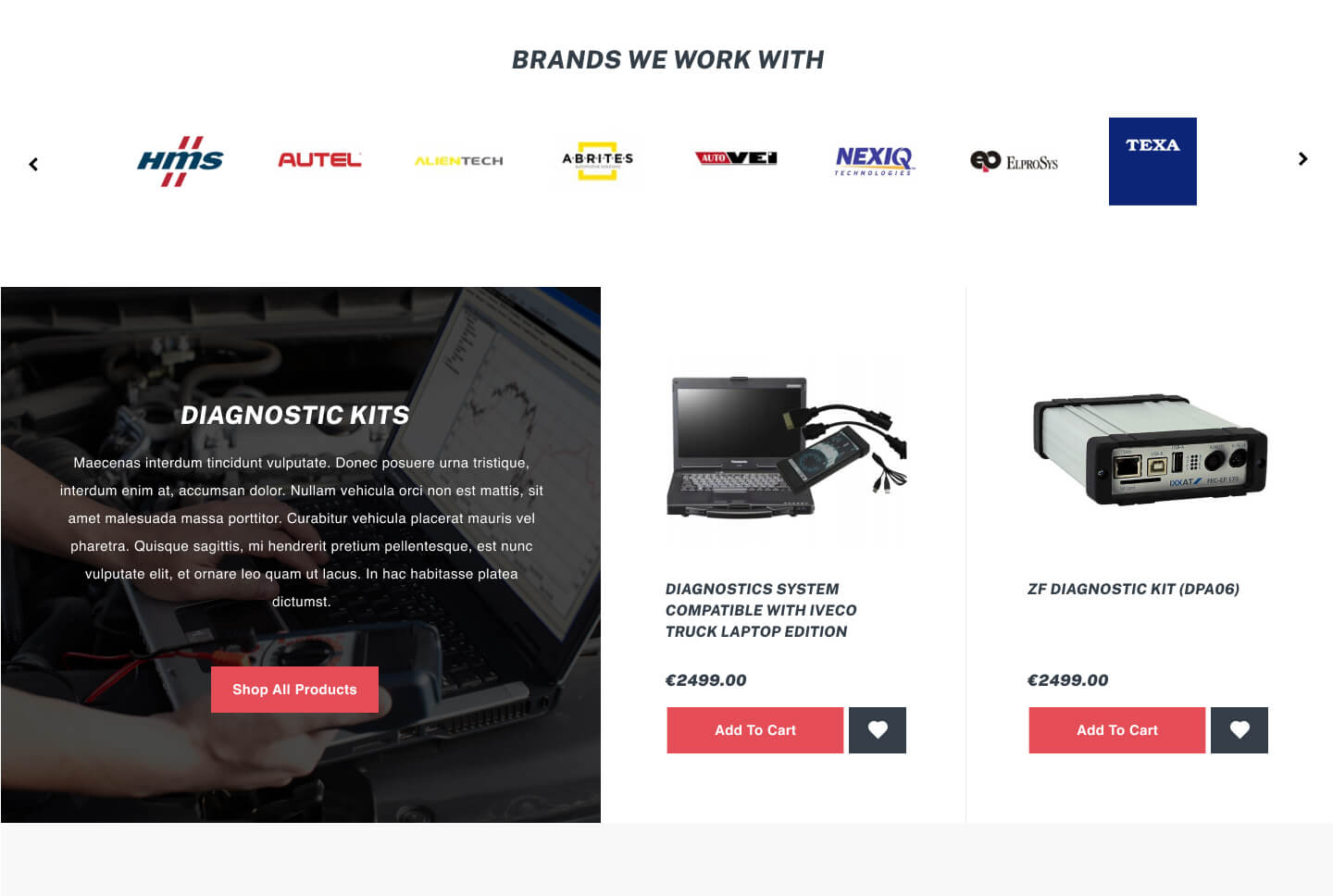
Homepage below-the-fold detail 2 — clearer merchandising rhythm and scan patterns.
Homepage below-the-fold detail 3 — deeper content hierarchy and conversion support blocks.
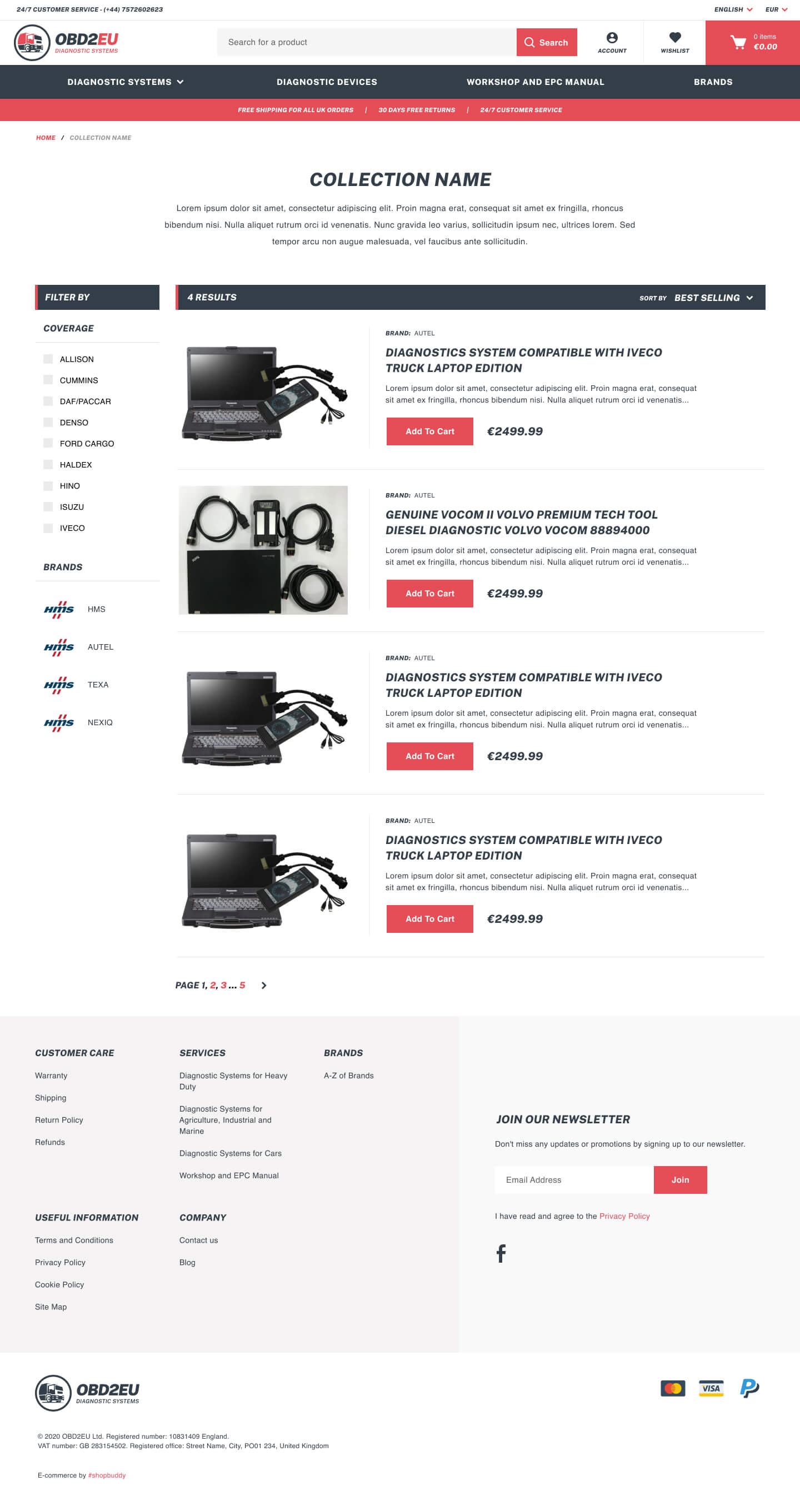
Collection page — browse and filtering made easier for users comparing highly technical products.
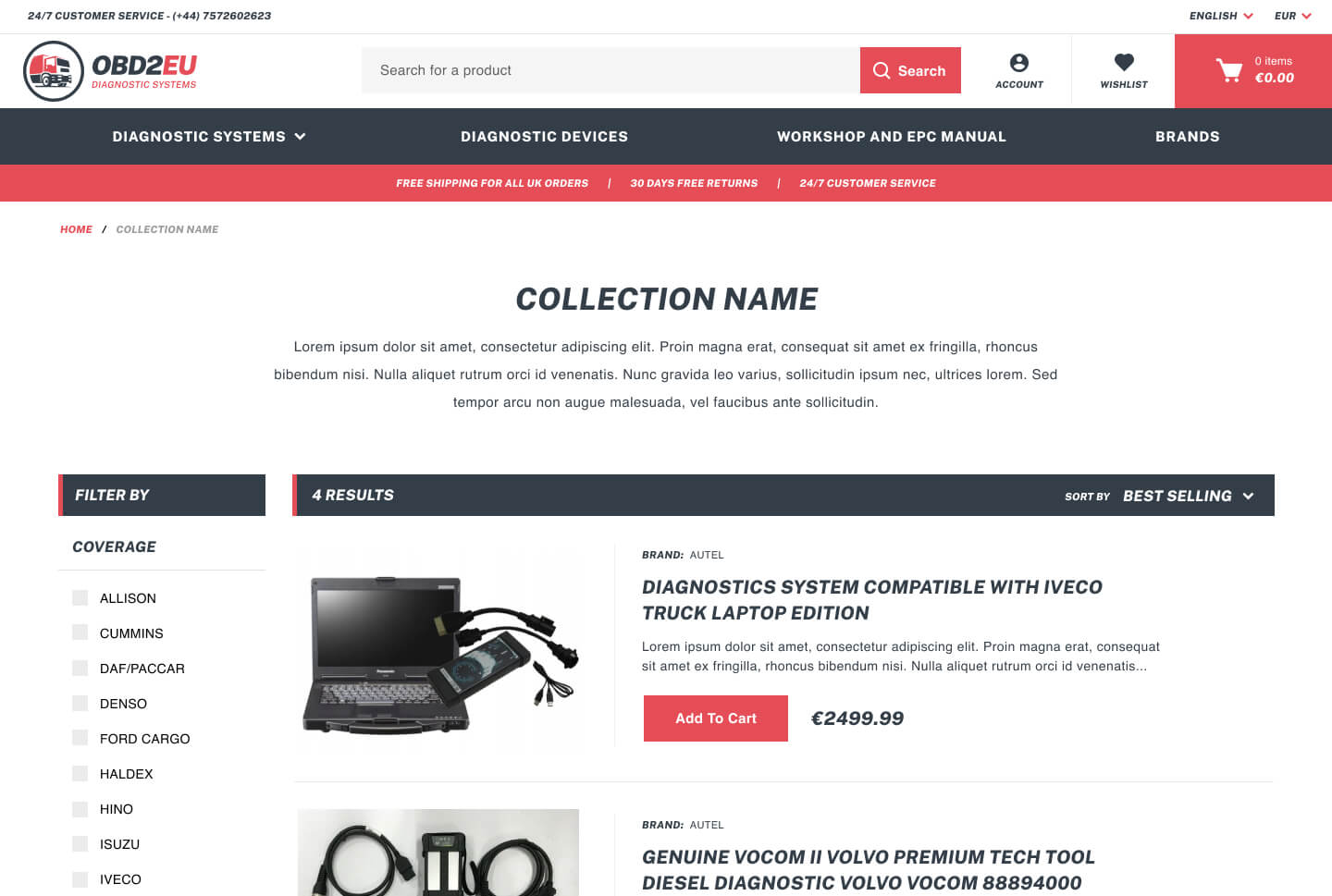
Collection zoom detail — clearer category scanning, spacing, and product comparison rhythm.
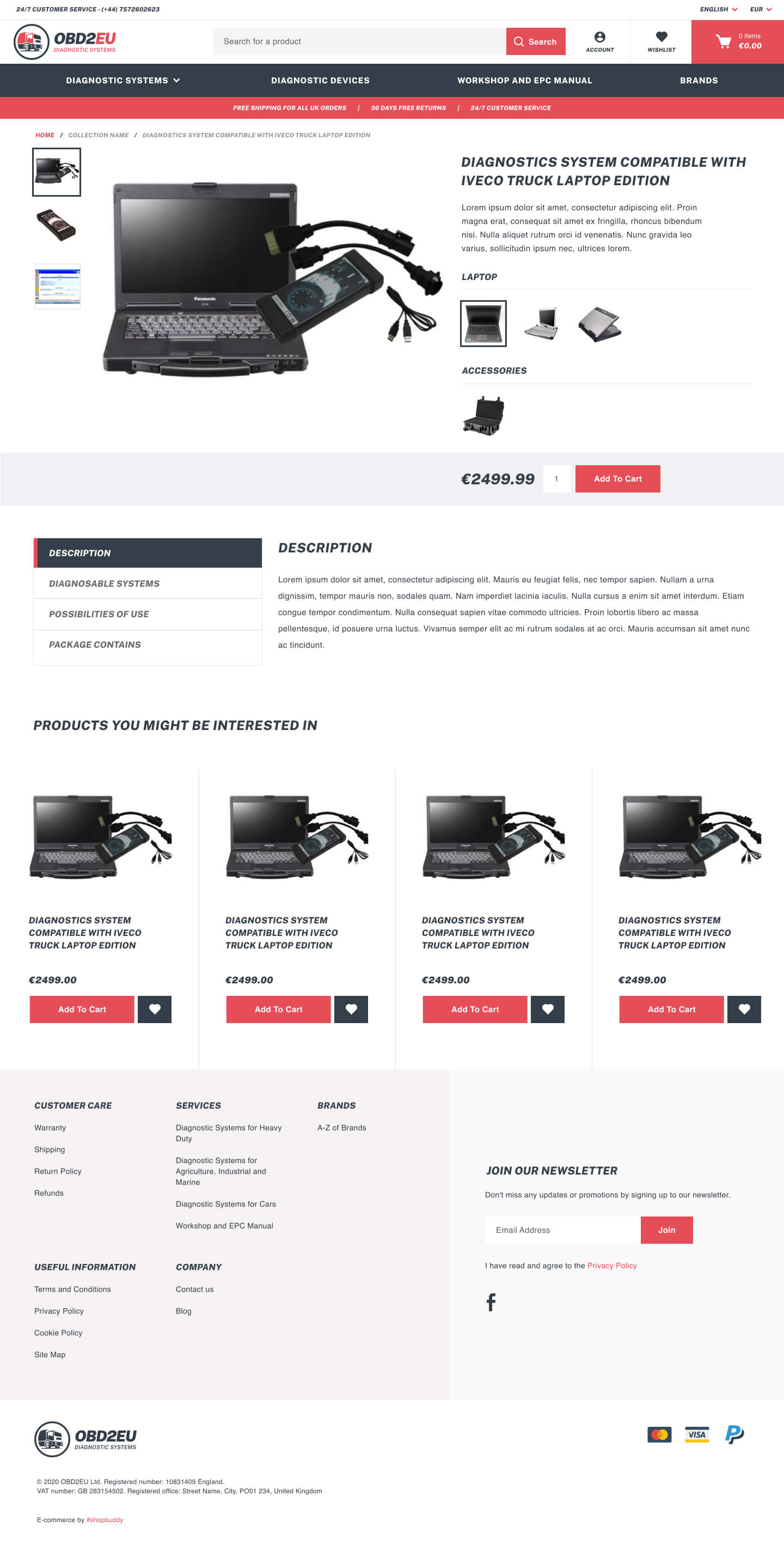
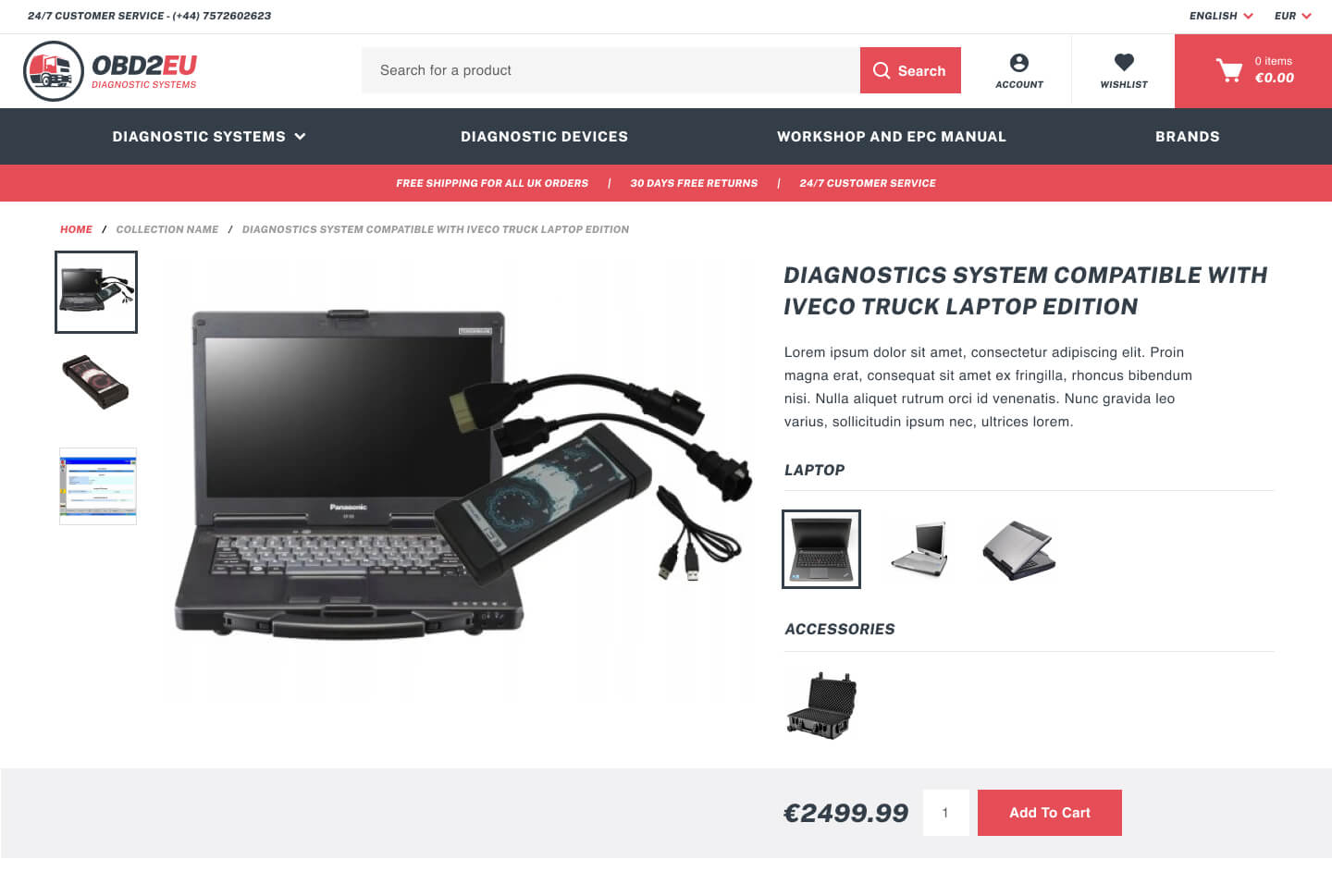
Product page — specs, compatibility, and purchase confidence brought to the front of the experience.
Product zoom detail — technical specs and CTAs organised for faster buyer decisions.
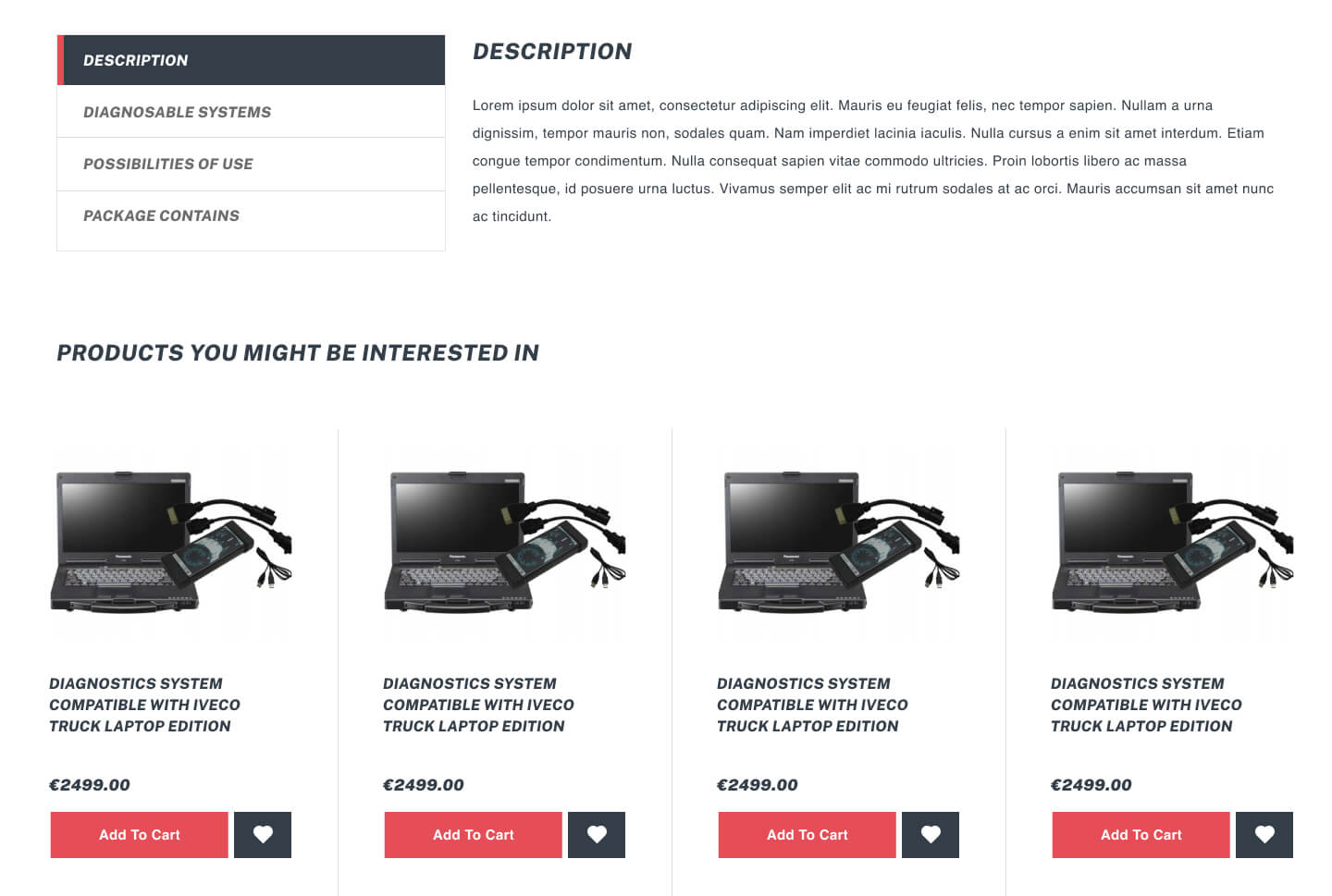
Product up-sell detail — related recommendations positioned to increase basket value.
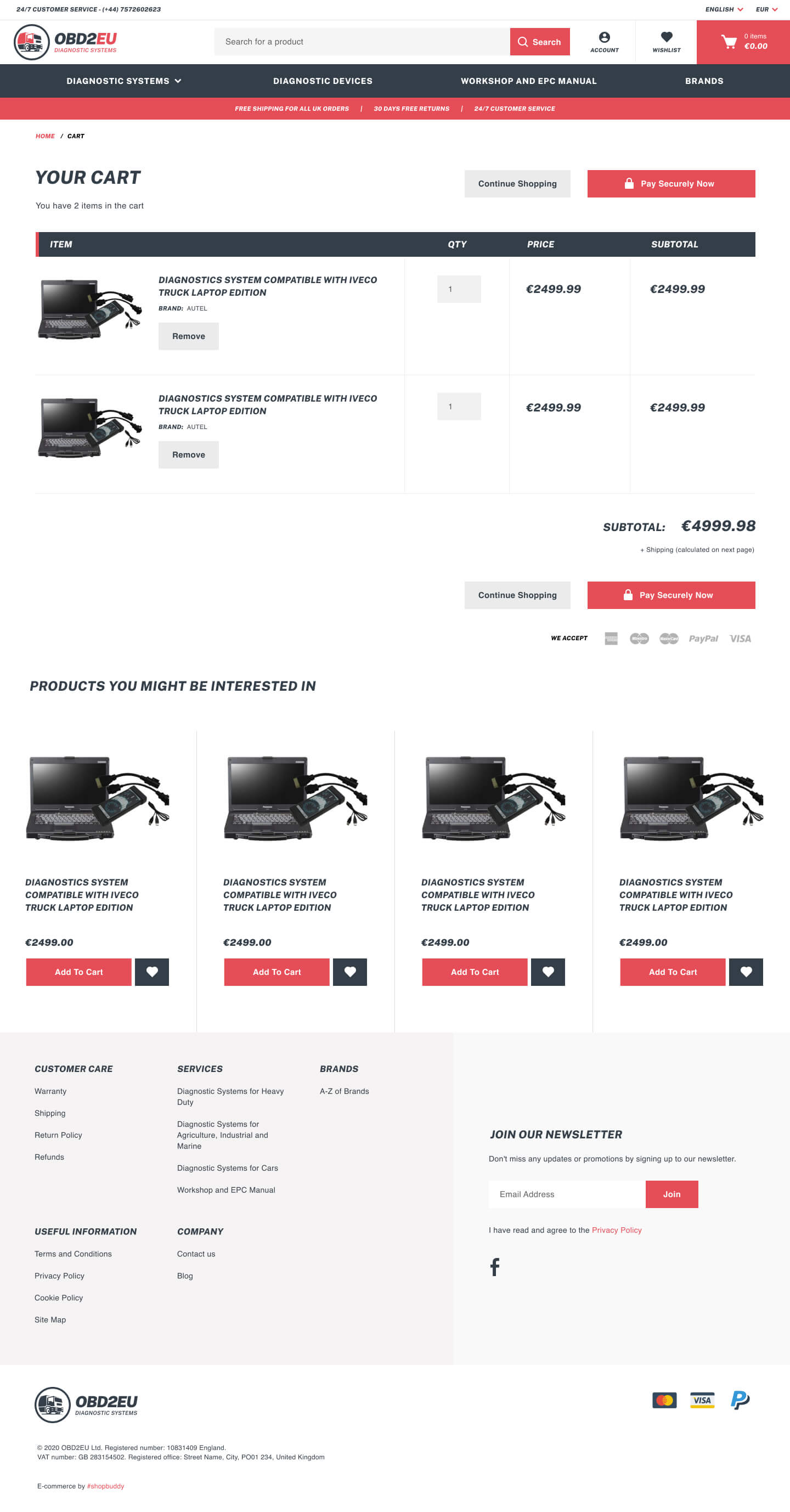
Cart and checkout — a cleaner purchase flow with visible reassurance and less friction at the point of commitment.
Homepage redesign — clearer hierarchy, stronger trust signals, and a more confident first impression for trade buyers.
Homepage zoom detail — closer look at content hierarchy, trust cues, and visual structure.
Homepage below-the-fold detail 1 — supporting content and trust-building sections.
Homepage below-the-fold detail 2 — clearer merchandising rhythm and scan patterns.
Homepage below-the-fold detail 3 — deeper content hierarchy and conversion support blocks.
Collection page — browse and filtering made easier for users comparing highly technical products.
Collection zoom detail — clearer category scanning, spacing, and product comparison rhythm.
Product page — specs, compatibility, and purchase confidence brought to the front of the experience.
Product zoom detail — technical specs and CTAs organised for faster buyer decisions.
Product up-sell detail — related recommendations positioned to increase basket value.
Cart and checkout — a cleaner purchase flow with visible reassurance and less friction at the point of commitment.
Rather than delivering everything at once, I presented each page individually — wireframe first, then hi-fi — and gathered structured feedback before progressing. This kept the client confident and aligned throughout, and avoided costly late-stage revisions.
OBD scanners and parts catalogues aren't iPhone-level photogenic. The solution was to make the layout, typography, and information design carry the visual weight — strong grid, confident use of whitespace, and a colour system that communicates reliability and expertise.
Implementing Shopify's dynamic add-to-cart meant users got instant visual confirmation of cart updates — no page reload, no uncertainty. Small interaction details like this build trust and reduce abandonment.
Workshop owners and technicians often browse on their phones. Every layout was designed to work cleanly on mobile — readable specs, tappable product cards, and a checkout flow that didn't require a desktop.
The redesign needed to strengthen trust quickly for first-time EU visitors. Warranty badges, support contact, clear returns policy, and a consistent professional UI all worked together as visible trust signals throughout the store.
The redesign gave the EU business a more coherent brand identity and a more credible Shopify experience, while making the catalogue easier to understand and shop. Key outcomes:
This project reinforced that great e-commerce UX isn't about the products looking beautiful by default — it's about designing a system that makes people feel confident enough to buy. When the products themselves are functional rather than fashionable, the design has to do more work: clearer hierarchy, stronger trust signals, and a more deliberate visual language.
The iterative wireframe → feedback → hi-fi workflow worked extremely well with a non-technical stakeholder. Balsamiq was the right tool for early conversations — it kept focus on structure and prevented the client from getting distracted by colour choices before the layout was agreed. Moving to Sketch only after sign-off on each page kept revisions manageable and the project on track.
Managing the entire project independently — from brief to live Shopify store — also sharpened my ability to prioritise, communicate proactively, and make design decisions without a team to validate every step. That end-to-end ownership is something I genuinely enjoy.
I’d be happy to walk you through the full process or discuss how I approach e-commerce UX projects.